Pé Nareia: our warm-up to Punta Tech 2026

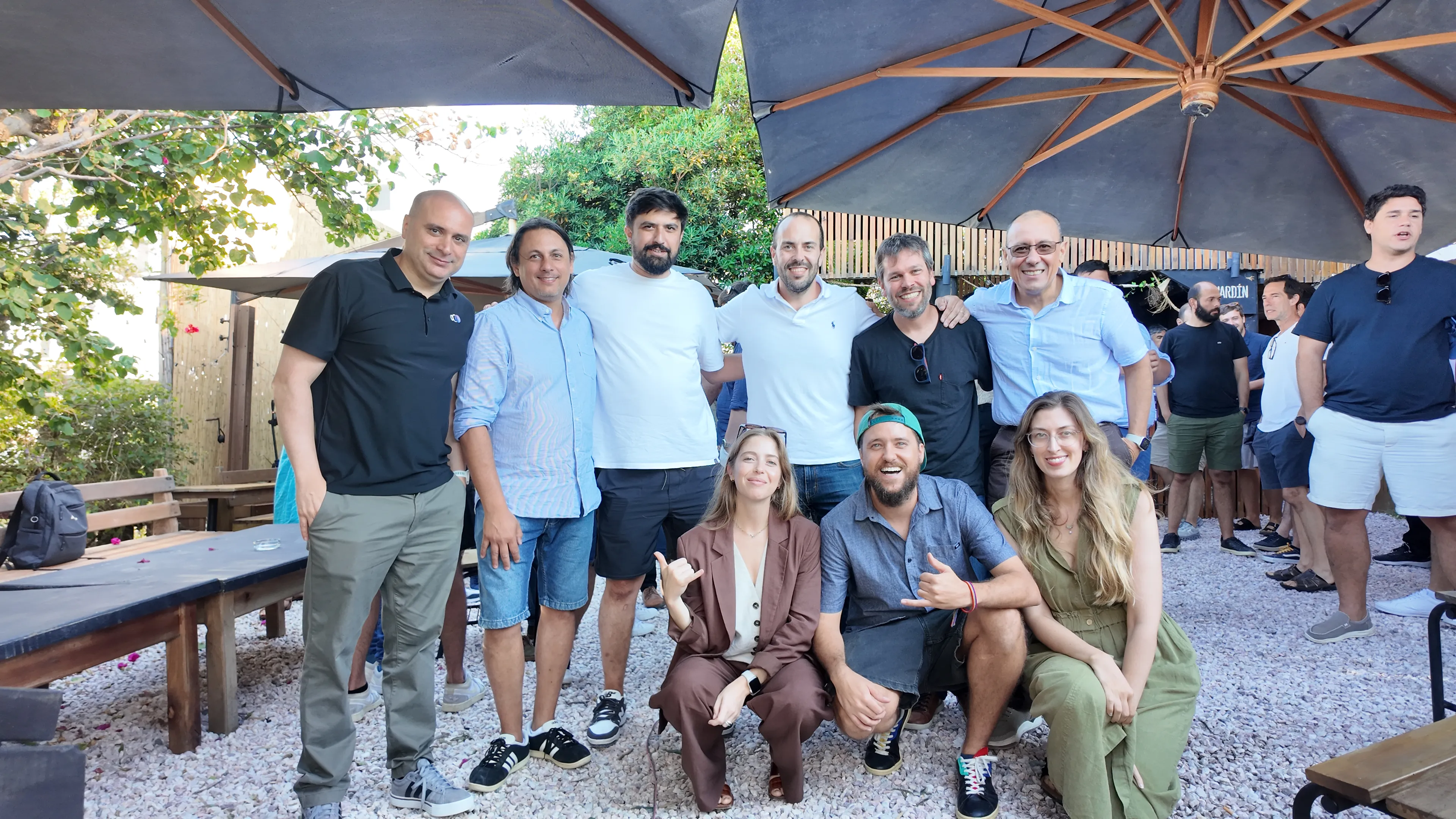
The first time I went to Punta Tech was in 2018. Nareia already existed — we had founded it in 2015 — but we were a group of engineers from fing who knew how to write code, how not to build products, and little else. We had been incubated at Ingenio since 2017, looking for help in everything we lacked: organizing a company, selling, thinking like a business. And we found it (someday I’ll write about the experience at Ingenio, because that stage marked us in ways we still feel). We didn’t have money for the Punta Tech ticket, but Ingenio donated some to incubatees and I got one.
Eight years later, we were sponsors of Punta Tech and organized an official side event as a warm-up. Life’s twists and turns.
”Pé nareia”
The event was called “Nareia warm-up: Strategic Outsourcing in Fintech.” Warm-up because it was literally a few hours before Punta Tech — people left our event and went straight to the main one. And “pé nareia” is a play on words with “pé na areia” (feet in the sand, in Portuguese), which also plays with our name. We like to do things with our feet on the ground (and even better, in the sand). No pedestals, no smoke and mirrors.
For a while we’d been analyzing how to participate in Punta Tech in a way that represented us. We didn’t want to just put a logo on a banner. We wanted to generate something of real value, conversations that mattered. So we set up this gathering just a few meters from Montoya beach in La Barra, with about 50 people who were really in the fintech trenches.
The title mentioned strategic outsourcing, but what we also wanted to discuss was something else: what happens when the relationship between an external technology team and its client stops being transactional and becomes something more. Or better: how do you make that happen?
The panel we’d owed ourselves for years
We had a pending account with Redpagos and Midinero. We’ve worked together for seven years with Miredpagos and several years with Midinero (the company born from Redpagos to revolutionize digital finance in Uruguay). And in that time we’ve lived through everything: moments of tension, difficult decisions, and lessons that aren’t in any product management book.
We always wanted to tell that story. Not from a polished case study, but from the honesty of what it really means to build digital products together over such a long time. The mistakes, the arguments, the pivots at six in the evening on a Friday in the first days of the month…
And that’s how the business panel was born, called “From vendor to partner: the challenge of building together long-term.” It was Diego Mello from Redpagos, Fernando Acerenza from Midinero, and me. It was moderated by Lucila Bonilla, my cousin, who comes from the world of economics (she was an advisor to the Central Bank of Uruguay), and who I’d wanted to bring closer to the Nareia community for a while. Her perspective from outside tech gave the panel a point of view we wouldn’t have achieved on our own.
We spoke without filters. About what it means to really get into the client’s business, not just execute tickets. About how you build together, and even about Midinero and Miredpagos products, given their impact on the daily lives of millions of Uruguayans.
Opening the technical kitchen
We didn’t want the event to be self-referential. Nareia talking about how great Nareia is doesn’t help anyone (and we kind of had to do it — it was the connecting thread). So we put together a second panel with CTOs and technical leaders from other fintechs: Guillermo Dotta from AstroPay, Miguel Castro from Totalnet, and Sebastián González from Inswitch. Johann, our CTO, moderated.
The topic: “Architectures and the technical challenges of opening the kitchen.” What happens with security, code governance, hybrid architectures when you integrate external teams into critical operations. Things that are rarely discussed publicly but that everyone working in fintech lives with every day.
And in this context, something unplanned came up: to get speakers for the second panel, I reached out to CUF (the Uruguay Fintech Chamber), and I ended up leaving as a partner! Ha. They sold me on the idea and I honestly loved it. I got to know what they’re building: it’s a community that’s growing strongly and we felt we had a lot to contribute. Organizing this event for their target audience was the ideal way to start. And the plan is to do more!
Real networking
We left space for networking (not as long as we would have liked — hopefully it continued at the main event). But not the superficial-exchange-and-”I’ll-write-you-later” kind of networking. We knew that if the panels sparked the right conversations, valuable networking would happen on its own. And it did.
When content is genuine, people make the most of it. They come up, ask, discuss, share. You don’t need forced dynamics or artificial icebreakers. You need what was said on stage to have stirred something inside each person.
The feedback was amazing. We had a blast.
The cycle that made me think about this article
Being sponsors of Punta Tech and doing an official warm-up as a preview was a decision we’d been maturing. The logic was simple: take advantage of the fact that people from across the tech ecosystem were already coming to the event, and create a prior space for deeper connection. We’d already done it in other countries successfully — it was time to do it in our own land.
But what moves me most is the cycle of the story. In 2018, I walked into Punta Tech with a donated ticket, representing a Nareia that was still learning to walk. In 2026, we came back as sponsors, organizing our own official side event, with clients of almost a decade sitting next to us telling the story of the products we built together.
I’m not saying this from a place of epic grandeur. I’m saying it from gratitude. To the people at Ingenio (and LATU) who donated that ticket and helped us grow. To Juan Pablo Nuñez, Diego Mello, and Fernando Acerenza who joined the idea without hesitation. To the speakers on the technical panel who opened their kitchen and hearts. To CUF for the welcome. To Lucila for bringing her perspective. And to the Nareia team that made all of this happen (amazing debut by Flavia as master of ceremonies :p).
Pé na areia, always.
If you work in fintech or tech and you’re interested in this kind of conversation, follow Nareia and CUF. This is just the beginning.